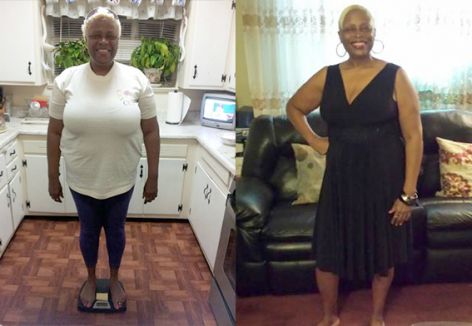
To understand why DietBet works, look at the recent research being conducted at leading universities, starting with a raft of studies on using financial incentives to encourage weight loss.
Dieting for dollars
A recent study at the University of Pennsylvania by Dr. Kevin Volpp grouped subjects into weight loss programs that offered financial lottery incentives, financial deposit contracts, and no incentives at all. After 16 weeks, the results were obvious: those in the lottery group lost an average of 13.1 pounds and those in the deposit contract group lost an average of 14.0 pounds. The groups given incentives lost on average 3.9 pounds more than those that weren't. Furthermore, 47.4% of the deposit contract group and 52.6% of the lottery group met the 16-pound target weight loss goal that had been set for them, but only 10.5% of the control group met it. The results are clear: people who were offered financial incentives to lose weight were five times more likely to reach their weight loss goal than those who were not offered any incentives.
The carrot and the stick
But there's more to the story than paying people to lose weight. A study by Dr. Leslie John of Carnegie Mellon University, now at Harvard Business School, gave participants a "deposit contract" in which they had to put their own money at risk (which she matched). At the end of the experiment, the participants with the deposit contract lost 8.7 pounds on average, while the control group only lost 1.17 pounds. The study concluded, "incentive approaches based on behavioral economics are effective in inducing weight loss." She successfully applied something that behavioral economists have known for a long time: people dislike losing money twice as much as they like winning it.
The lesson: don't just pay people to lose weight. Let them bet on themselves and you'll get a whole new dimension of motivation—it's the combination of a carrot and a stick. We have certainly found this to be true with DietBet: when you have to put your money where you mouth is, it works!
Offices: the perfect place for dietbetting
Does environment matter when it comes to incentive-based weight loss? A study by Dr. John Cawley, co-director of Cornell University's Institute on Health Economics, Health Behaviors and Disparities, specifically explored incentive-based weight loss inside an office. A test company split its employees into three groups: one got paid per percentage point of weight loss, another was given a financial deposit contract, and a third received no compensation. His findings: on average, the subjects in paid to lose weight 1 lost 1.4 pounds, the subjects with their own money on the line lost 3.6 pounds, while the control group, with no incentives, achieved no significant weight loss.
People get into office dietbets. They work with and against their officemates to achieve their goals. For HR managers, it's a no-brainer, a nearly free way to motivate employees to adopt a healthier lifestyle. Start a dietbet in your office and see how fast those candy jars disappear. It builds morale organically as employees self-organize healthy activities, like lunchtime walks. We've seen that dietbets promote morale like nothing else and give everyone in the company (even the people not playing) something besides American Idol to talk about around the water cooler.
The hidden power of social motivation
This brings us to the last factor: social motivation. While money certainly makes it interesting, it isn't the only thing that makes DietBet work. The social apparatus of DietBet also plays a big part.
At Harvard Medical School, Dr. Nicholas Christakis and Dr. James Fowler (at UCSD) found that it's easier to lose weight with friends than by yourself. In particular, they observed that weight gain (somehow) spreads virally across one's social network. When your friends gain weight, so do you. That's a disturbing thought. But they also found that this phenomenon can be a two-way street: weight-loss can also spread virally across your social network. They concluded that it's possible to literally start an epidemic of healthy behavior where you and your friends all lose weight together.
We call this social dieting, and it's one of our favorite features of dietbetting. It's why we built in sharing features including a social messaging platform. When you're sitting a dinner and see the message that your dietbet rival just skipped dessert, guess what? You push the pie away. As Charles Barkley put it, "There's nobody you'd rather beat than your good friend." DietBet harnesses the hidden power of social motivation to achieve weight loss in a new and effective way. You won't believe how a friendly competition can get you to change behaviors like nothing else can.
Not surprisingly, people who have played DietBet report losing weight, having fun, and even finding post-game enthusiasm for sticking with their new healthy habits. After you play DietBet, we'd love to hear how worked for you. And if you're a researcher in this field, we'd love work with you. Please email research@dietbet.com.